Most of what keeps a stormwater basin from failing gets buried by the end of the week.
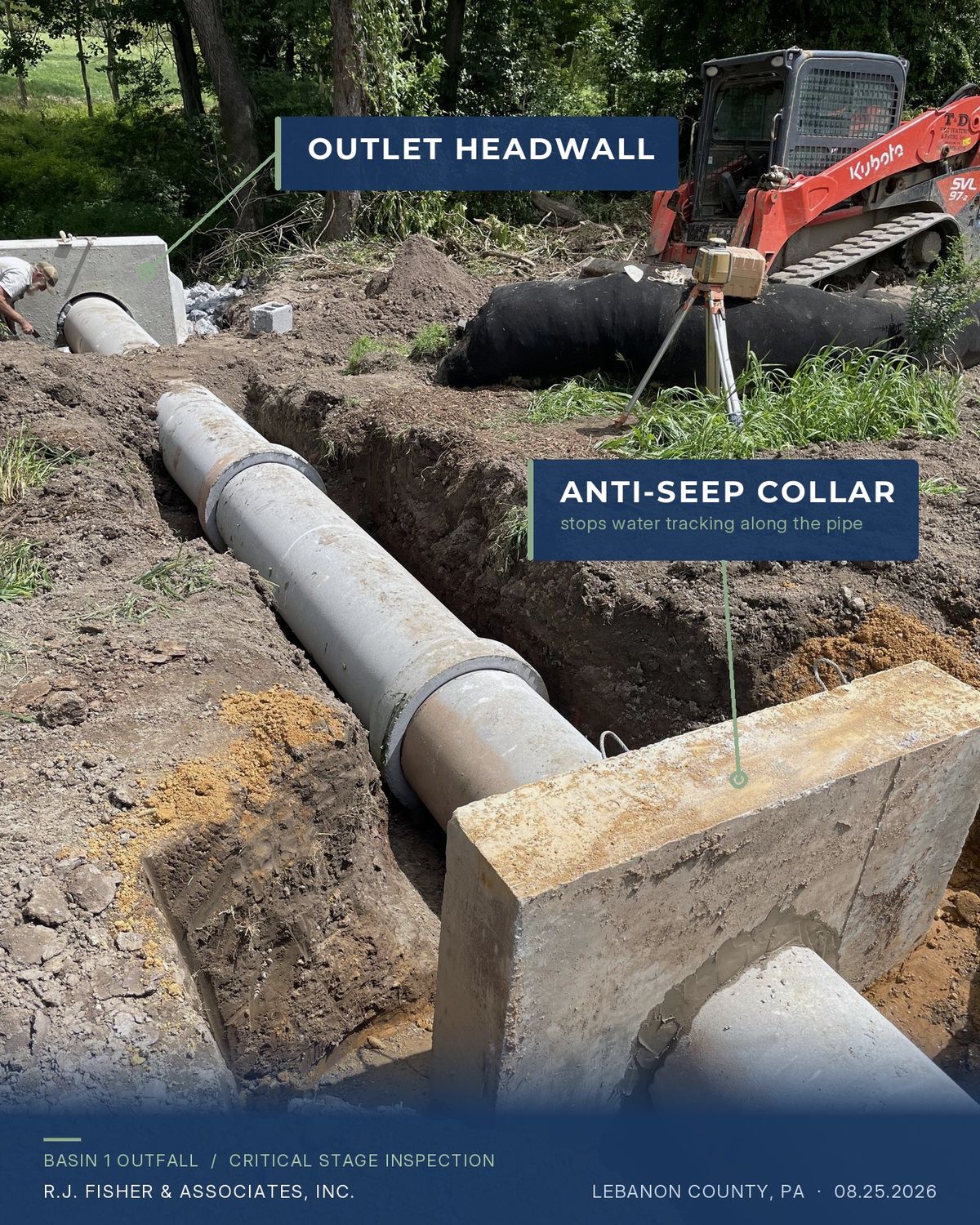
The plate standing in the trench is an anti-seep collar, set around the pipe that carries water out through the basin embankment. Water that finds the outside of a buried pipe will follow the pipe. It works along the wall, carries fine soil with it, and given enough years it can open a channel straight through the embankment. That failure mode is called piping, and it is one of the more common ways an earthen embankment lets go. The collar interrupts the path and makes the trip long enough that the water does not get there.
At the far end is the outlet headwall, where the pipe daylights onto the riprap apron.
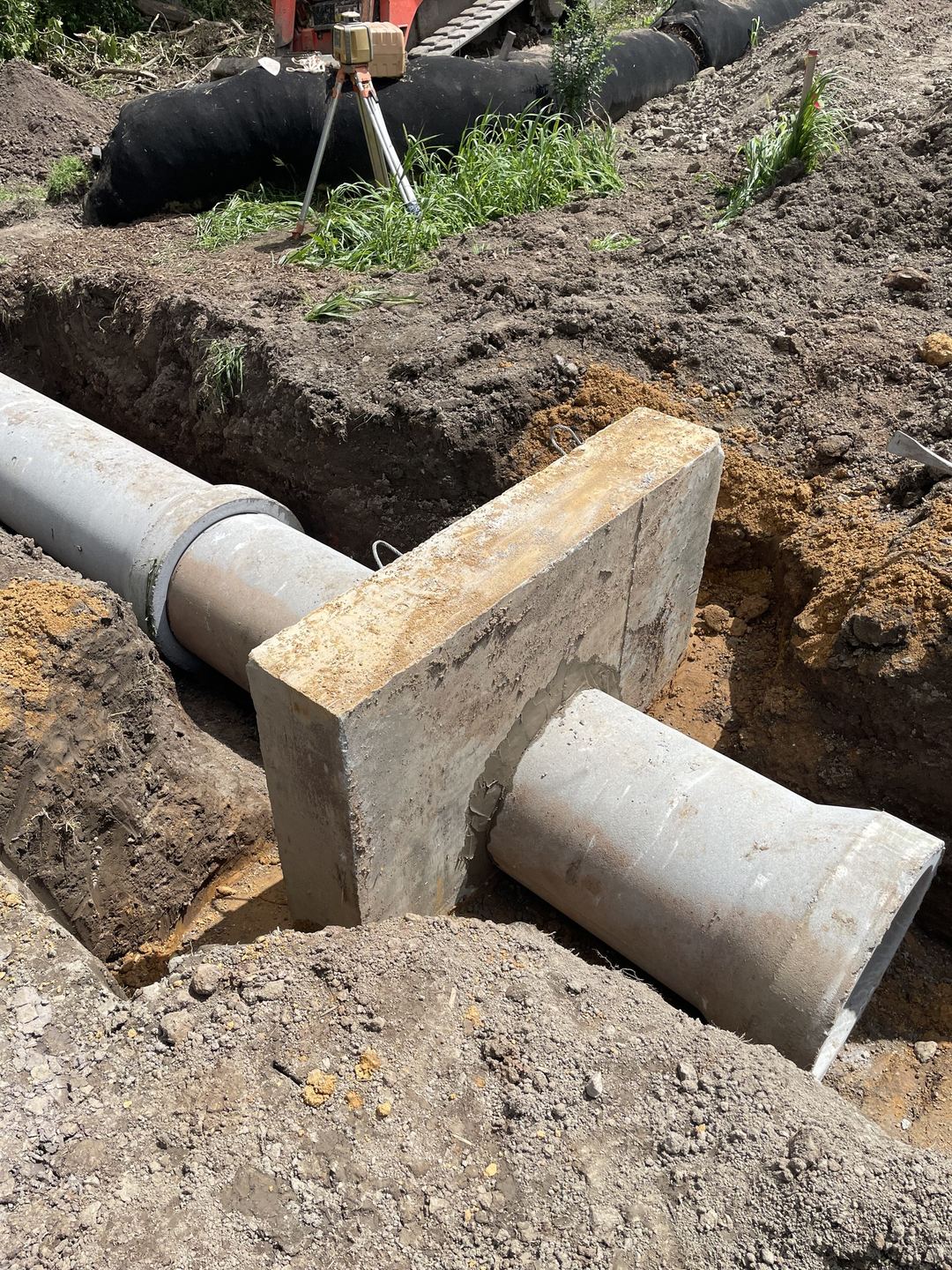
Once that trench is backfilled, none of it can be inspected again. That is why it is a critical stage. We get out there while it is still open, we look at it, and we photograph it. After that, anyone who wants to know whether it was built right is looking at a photograph.
Three of those stops on this basin: the anti-seep collars, the underdrain and stone envelope before it gets buried, and the blending of the soil media. We were out for the first one on August 25, in Lebanon County. The second and third came a week later.
Basin 2 on the same job runs two outlet barrels through a single collar, which changes the hard part from the concrete to the backfill under the pipes.
Not much to look at. Good day.