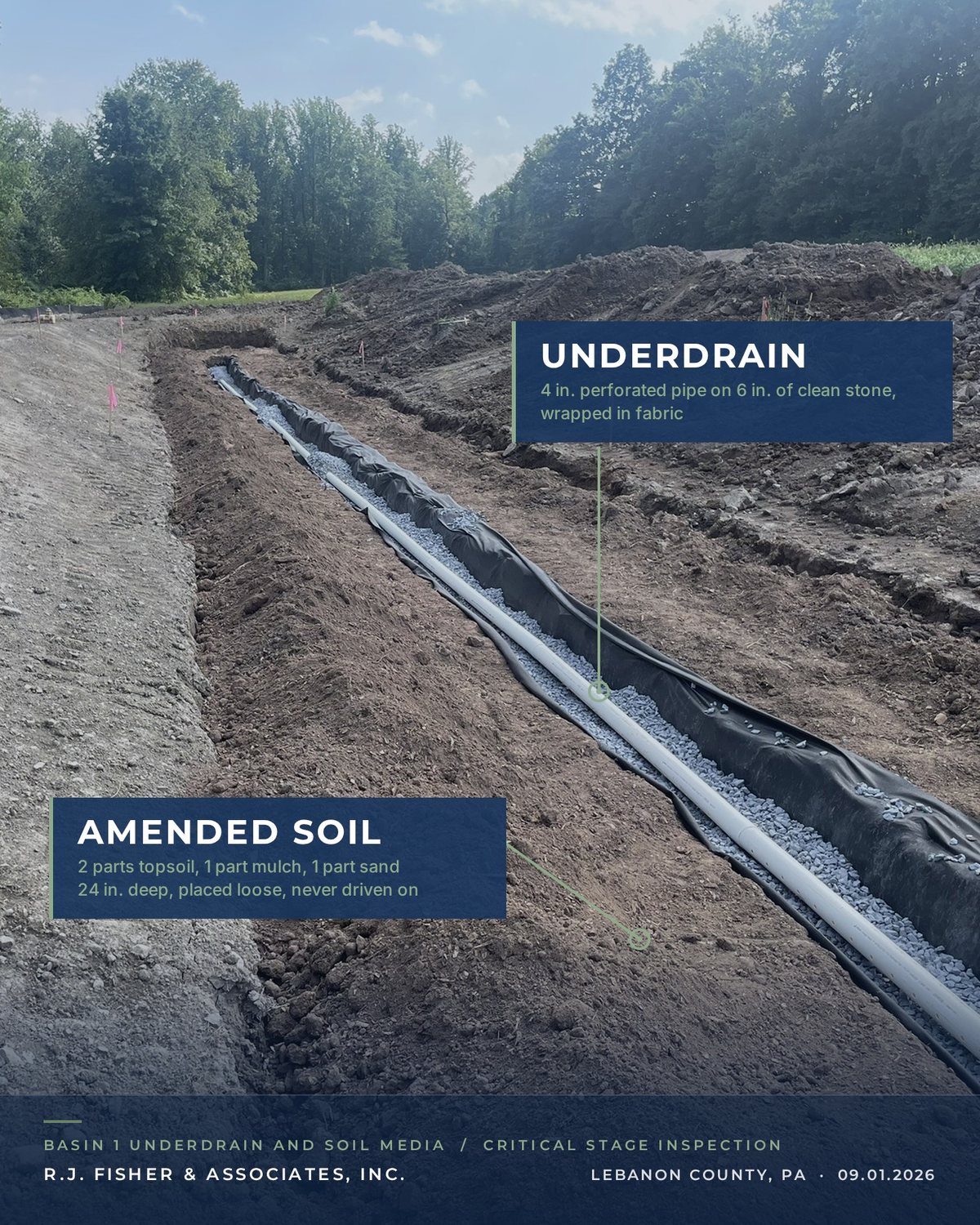
Same basin, one week later. Last week it was the anti-seep collar on the outlet pipe. This week it was the two parts that do the actual work.
The white pipe is the underdrain, four inch perforated pipe running the length of the basin floor on six inches of clean stone, wrapped in fabric so fine soil cannot work its way into the stone. Sixteen inches of stone envelope around the barrel, and the whole thing sits at the bottom of the internal water storage layer.
The dark material on both sides of the trench is not dirt. It is a blended soil, two parts topsoil, one part mulch, one part sand, mixed in a pile before it goes anywhere near the hole. Twenty-four inches of it across the whole basin bottom, placed loose, and placed from outside the basin. Nobody drives on it. Compact it once and the pore space the design depends on is gone, and there is no fixing that afterward.
Here is the part that surprises people. The underdrain does not drain the basin. Inside the outlet box the pipe turns up a foot before it can let anything out, so the bottom foot of soil stays wet on purpose, and what does leave goes through an orifice seven tenths of an inch across. Runoff soaks in, sits in the soil, and leaves slowly. Pennsylvania calls this a managed release basin. The name is accurate.
For anyone who wants the reason for the elbow: the release orifice sits at the top of the internal water storage zone, which is what keeps the lower foot saturated between storms.
Both of these were critical stage inspections, the second and third of three on this basin. The collar was the first. Next the pipe goes under two feet of soil and the soil goes under seed and matting, and after that nobody can look at any of it again.
Basin 2 came a week after this one, and it has two outlet barrels running through a single collar.
More to look at than last week.